In the late 1990s, the streams of M’muock ran with such force that they could carry a person weighing 60 kilograms, even during the dry season. These waterways were the lifeblood of the local community, supporting agriculture, household use, and the broader ecosystem. They were, in the truest sense, taken for granted because they had always been there.
That reality has changed dramatically. Many of those same streams are now dry even at the height of the rainy season. The cause is not a mystery. As the demand for farmland increased, farmers expanded their fields deeper and deeper into the areas surrounding water sources. Agricultural practices that were poorly suited to the M’muock landscape accelerated erosion and stripped away the natural vegetation that once held moisture in the soil and regulated the flow of water through the terrain.
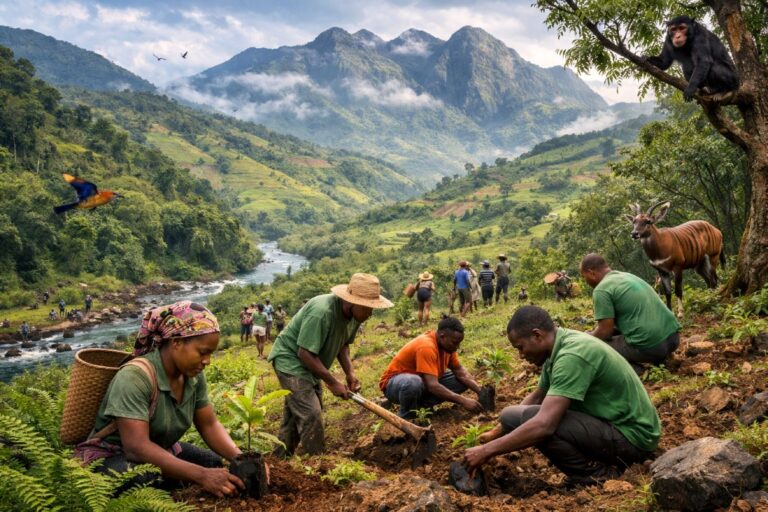
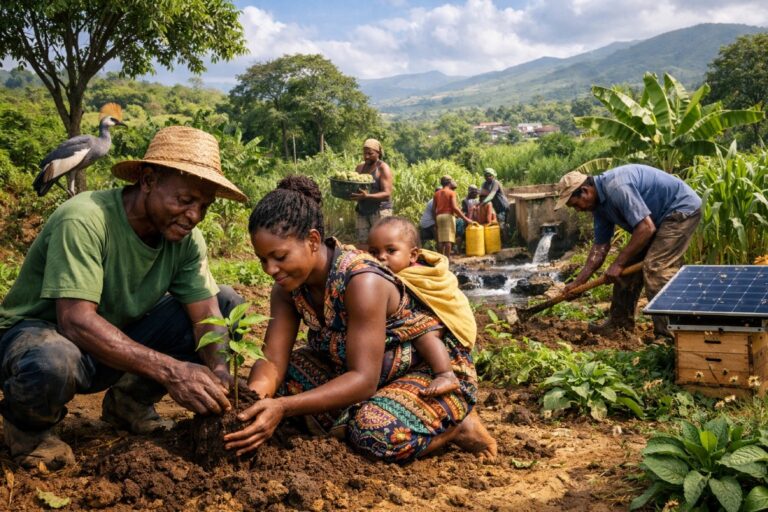
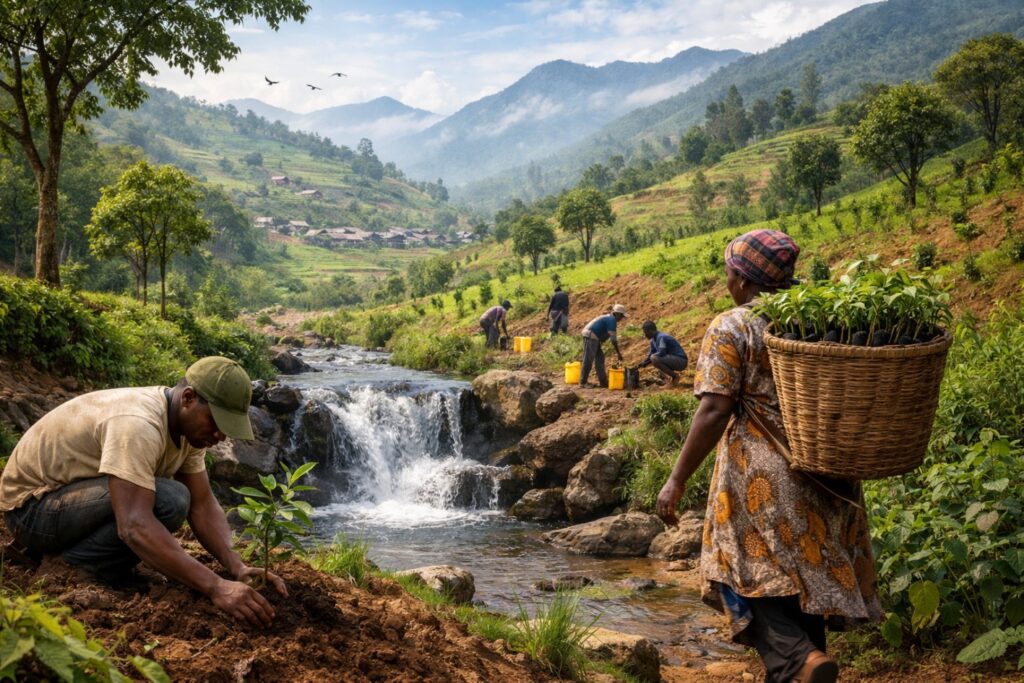
This is the story that the Green M’muock initiative was created to address. Launched in 2016 by Operation Green Space with an initial grant, the project targets the root cause of the water crisis: the degradation of the ecosystems that protect and sustain water catchments. The core strategy is straightforward but vital. Plant trees around water sources, restore the natural buffer zones that prevent siltation and drying, and educate the community on practices that protect rather than deplete the ecosystem.
When trees are removed from the banks and slopes surrounding a stream or spring, rainwater runs off quickly instead of being absorbed into the ground. Without root systems to hold the soil, erosion accelerates and sediment fills waterways. Over time, the water table drops, and streams that once flowed year-round simply disappear. Replanting these areas reverses the cycle. Tree roots stabilize the soil, allow water to infiltrate the ground, and create shade that reduces evaporation.
In 2019, the project gained momentum when Operation Green Space signed a memorandum of understanding with Green Step e.V., a German partner organization, to continue and expand implementation. This partnership has been essential in keeping the work going, funding seedling production, and supporting community engagement activities.
The lessons from M’muock are relevant far beyond this single community. Across Cameroon and the wider Central African region, the relationship between deforestation and water scarcity is playing out in village after village. When forests disappear, water disappears with them. Protecting watersheds through tree planting and community education is one of the most cost-effective interventions available for securing clean water, supporting agriculture, and building resilience against climate change.
Operation Green Space invites individuals, organizations, and communities to join the effort. Whether you can plant a tree, sponsor a seedling nursery, or spread the word, every action contributes to a future where the streams of M’muock and places like it flow freely once again.
Support Operation Green Space: Visit ogscameroon.org/donate to plant a tree or ogscameroon.org/get-involved to join our mission.